Digital Campaigning 2026: How AI-Generated Content and Micro-Targeting are Influencing the Upcoming Assam Elections.
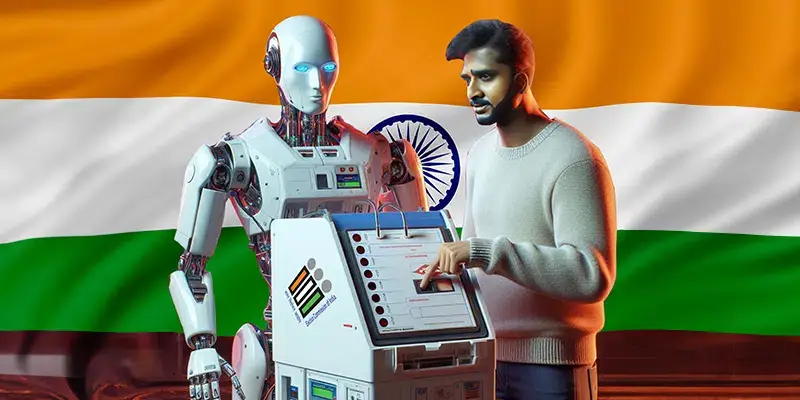
Published by: Assam Digital | Expertise: Political Digital Marketing & SEO The Dawn of a New Political Era in the Northeast As the sun rises over the Brahmaputra, the landscape of the Assam Elections is no longer just being shaped by grassroots rallies and physical posters. The year 2026 marks a historic pivot where the battleground has shifted from the dusty roads of Morigaon and the tea gardens of Dibrugarh to the digital screens of five crore mobile devices. At the heart of this revolution lies AI content and the surgical precision of micro-targeting. At Assam Digital, we have witnessed the gradual evolution of political communication. However, the 2026 elections represent a “quantum leap.” It’s no longer about who shouts the loudest on a loudspeaker; it’s about who understands the voter’s intent through data and reaches them with personalized, AI-driven narratives. This article explores the intricate dance between technology and democracy in Assam. The Rise of AI Content in the 2026 Assam Elections When we talk about AI content in the context of the Assam Elections, we aren’t just referring to automated social media posts. We are talking about Generative AI that creates highly localized, dialect-specific, and emotionally resonant messaging at a scale never seen before. 1. Hyper-Localized Language Models Assam is a land of linguistic diversity. From the Bodo heartlands to the Bengali-speaking tracts of the Barak Valley, a “one-size-fits-all” message fails. In 2026, political parties are using LLMs (Large Language Models) trained specifically on Assamese dialects, Sylheti, and tribal languages. This AI content allows a candidate to address a voter in their mother tongue with cultural nuances that an outsider could never replicate. 2. Synthetic Media and Digital Avatars Gone are the days when a top leader had to physically visit every constituency. Through high-fidelity deepfakes (used ethically for campaigning) and digital avatars, leaders can now “appear” in a thousand village squares simultaneously. These AI-generated videos can answer local questions in real-time, making the voter feel heard and valued. 3. Rapid-Response Visual Content In the heat of an election, the narrative changes every hour. AI image generators and video editors allow campaign rooms to produce high-quality infographics and short-form videos (Reels/Shorts) within minutes of a political development. This agility is the new currency of the Assam Elections. Micro-Targeting: The Surgical Knife of Digital Campaigning While AI content provides the ammunition, micro-targeting is the guidance system. In the 2026 Assam Elections, the “broadcasting” model is dead. It has been replaced by “narrowcasting.” Micro-targeting involves using Big Data and machine learning to segment the electorate into tiny “voter personas” based on: Psychographic Profiling: Understanding a voter’s fears, aspirations, and values. Geofencing: Delivering specific promises to a specific neighborhood (e.g., addressing a bridge issue in a particular ward of Guwahati). Sentiment Analysis: Real-time monitoring of how people feel about a specific policy or candidate statement. Imagine a voter in Jorhat who is passionate about organic farming. Instead of receiving a generic manifesto, their Facebook feed and WhatsApp inbox receive AI content specifically highlighting the party’s agricultural reforms and subsidies. This is the power of micro-targeting. The Role of WhatsApp: Assam’s Digital Town Square In Assam, WhatsApp isn’t just a messaging app; it’s the primary source of news. For the 2026 Assam Elections, political strategists are deploying “AI Chatbots” that act as 24/7 campaign volunteers. These bots can engage in complex conversations, debunk “fake news” targeting their candidate, and provide personalized voting booth information. By integrating AI content directly into WhatsApp groups, parties are bypassing traditional media filters, creating a direct-to-voter pipeline that is incredibly difficult for the opposition to disrupt. Google E-E-A-T and the Ethics of AI in Politics As an SEO and digital marketing leader, Assam Digital strictly adheres to Google’s E-E-A-T guidelines (Experience, Expertise, Authoritativeness, and Trustworthiness). When applied to the Assam Elections, these principles are vital for a healthy democracy. The Experience Factor We’ve analyzed data from the 2016 and 2021 cycles. The shift toward digital was evident, but 2026 is the first year where “AI-First” is the mantra. Our experience tells us that while technology wins attention, trust wins votes. Authoritativeness and Trust The dark side of AI content is the potential for misinformation. Deepfakes used to malign opponents or spread communal disharmony are significant threats. To maintain trustworthiness, political parties in the 2026 Assam Elections must adopt a “Digital Ethics Charter,” labeling all AI-generated media to ensure transparency. How Political Parties are Restructuring Their “War Rooms” The traditional “War Room” filled with posters and landline phones has been replaced by “Data Hubs.” These hubs are staffed by: Data Scientists: To analyze voter trends and turnout probabilities. Prompt Engineers: Specialized in creating high-converting AI content. Cybersecurity Experts: To protect the campaign’s digital assets from hacking and foreign interference. Regional Language Experts: To fact-check AI-generated translations and ensure cultural sensitivity. The “Brahmaputra Effect”: Influencing Rural Voters via AI A common misconception is that AI content only influences urban voters in cities like Guwahati or Dibrugarh. However, the proliferation of cheap 5G data has brought the Assam Elections digital battle to the most remote “Chaporis.” Voice-activated AI is particularly influential here. For voters with lower literacy rates, receiving a voice note in their native tongue from an AI-simulated voice of a leader can be more persuasive than any written pamphlet. This “Brahmaputra Effect” bridges the digital divide, making the 2026 election the most inclusive digital event in the state’s history. LSI Keywords and Contextual Relevance To understand the full scope of this topic, one must look at related concepts like Algorithmic Bias, Voter Engagement Metrics, Predictive Analytics, and Digital Sovereignty. The Assam Elections are a microcosm of how AI content is reshaping global democracy. By focusing on Social Media Optimization (SMO) and Political Branding, parties are ensuring their message survives the volatile attention economy of 2026. Summary: The Future is Here The 2026 Assam Elections will be remembered as the “AI Election.” The combination of AI content and micro-targeting has created a paradigm where campaigns are more efficient,